
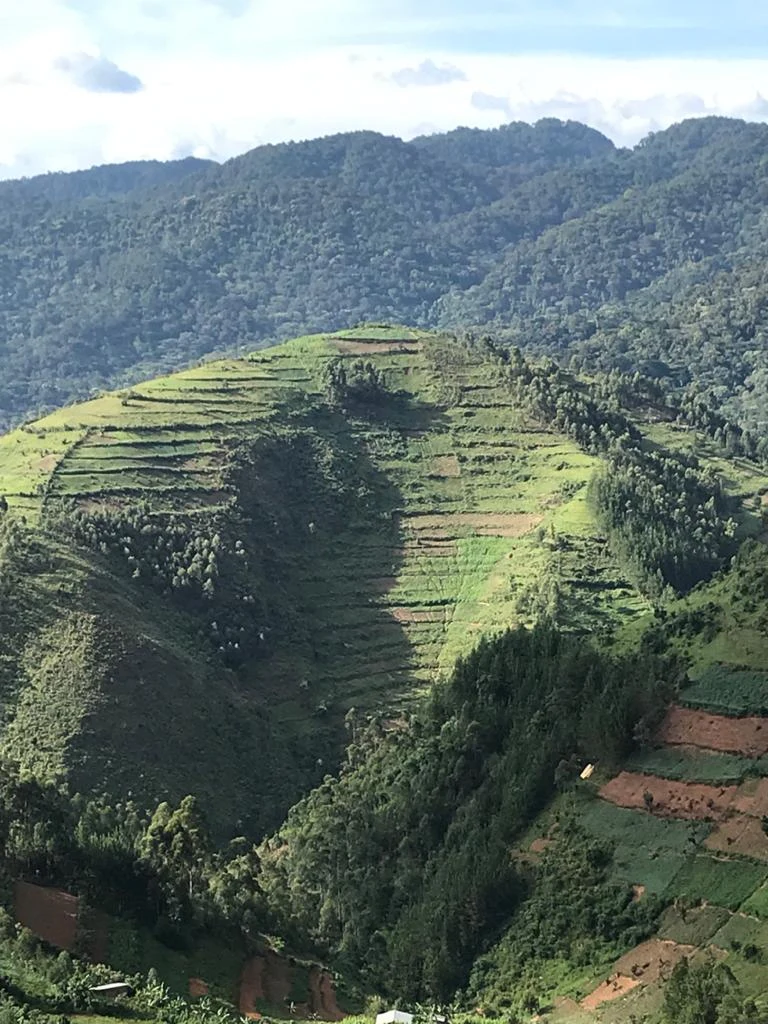

A mountain-gorilla image often becomes the whole story of a place. It can be a powerful introduction, but it leaves much outside the frame. Conservation involves people with different responsibilities, communities with their own priorities and livelihoods that continue long after a visitor has gone home.
Reading that wider context takes care. Ask who is speaking, what work they describe and when the account was published. A personal story can help make a subject concrete without being made to represent every resident, every organization or every part of a region.

Lake Victoria Island Cycling Tour from Kampala

Kampala Walking City Tours (Women-Guided)
Women-Guided Kampala walk Tour Discover Kampala, Uganda’s cultural capital, with inspiring female guides sharing t...

Steve Kampala Walking tours (Airpals Safaris tour)
Join our walking tours every day at 10:00Am or 2:00pm and get a broader perspective about the Geo-political landscap...

Best Jinja source of the River Nile day experience
This 1 day best of jinja tour is a great way to explore a mix of cultures, nature, history and new experiences with...
Begin with a named, published voice
In its 2021 profile of Dr. Gladys Kalema-Zikusoka, the United Nations Environment Programme describes a wildlife veterinarian whose work connected conservation with community health and livelihoods. The profile discusses Conservation Through Public Health and the value of local leadership. Read it as UNEP’s published account of her work, with its own date and context.
This publication has not interviewed Dr. Kalema-Zikusoka and does not represent her or her organization. Keeping that distinction visible lets a reader follow the original voice without mistaking a quotation or summary for a partnership, endorsement or service offered here.
Recognize different responsibilities
A tracker, ranger, veterinarian, researcher, porter and accommodation worker may each contribute differently to the setting around a visit. Their roles should be explained by the responsible organization or the person doing the work. Avoid treating those titles as interchangeable, or assuming that professional conservation activity is a visitor attraction.
When someone speaks about their work, give them room to describe it in their own terms. Ask permission before recording or making a portrait. If they decline, respect that choice without trying to obtain the same material indirectly. A useful encounter does not have to produce a photograph.
Keep everyday places in view
The agricultural edge around a forest is also a lived landscape. Homes, fields, schools, businesses and transport have purposes beyond tourism. A caption should identify what is actually shown and where the image was made, without assigning a livelihood, identity or personal story that the source does not establish.
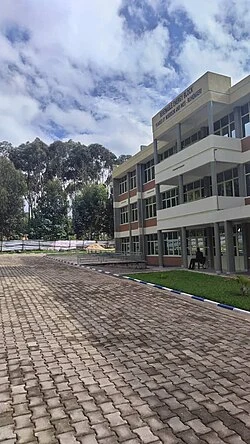

The small campus photograph here records a named educational building in Musanze. It illustrates ordinary civic life in a regional setting; it is not a conservation office, a meeting point or a property operated by this site. That kind of precise caption is more useful than a vague label about “local culture”.
Ask practical questions about local experiences
If a provider proposes a community activity, ask who leads it, who has agreed to participate and what visitors are being invited to do. Clarify the arrangements, payment and photography expectations before arriving. A respectful activity gives participants agency and a clear role in how their work is presented.
Support for a business or programme should be described accurately. Do not assume that buying an excursion automatically funds a particular conservation project. Look for a specific explanation from the responsible organization and keep that explanation separate from the provider’s general promotional language.
Follow the original sources
Virunga National Park’s account and Visit Rwanda’s tracking information offer different institutional perspectives. They are useful starting points, not one interchangeable voice for the region. Read dates and named responsibilities alongside the story.

3-Day Safari Murchison Falls Safari
Travelling to Murchison falls National Park makes one modest. You see what a tiny place you occupy in the world, we usher you into different activitie...

8-Day Uganda Vacation Including Chimps and Gorilla Trekking
This tour combines safari, primates encounter, and relaxation in just one go. One is able to cover a number of exper...

Inside Kampala Walking Tour (Female Guided)
EMPOWER YOUR KAMPALA EXPERIENCE WITH A FEMALE-GUIDED WALKING TOUR. Explore Kampala's vibrant culture and history wi...

Affordable 2 days Murchison Falls and Wildlife Game Viewing
2 days Murchison falls Safari Uganda, Murchison Falls National Park has spectacular beautiful falls and are definite...
Our purpose is to connect careful preparation with a wider understanding of place. Return to the guides for geographic context, then ask the people responsible for your proposed arrangements the questions that only they can answer.

Zanzibar Jozani Forest and Spice Farm Tour with Swahili Lunch
Explore the natural and cultural richness of Zanzibar on a private guided tour of Jozani Forest and a traditional spice farm. Start your day after rea...

Kampala’s Best Experience walking tour
Based on our past positive reputation for the past years, we guarantee you that our team is so exceptional in delive...

Kampala Cultural Tour
Its an informative, breathe taking experience that makes theb visitor get a clear insight into the country's culture...

The Best 1Day Jinja Tour & source of the Nile River Experience
Jinja is arguably Uganda’s heartbeat, it is a gem of unrivaled beauty, an asset to Uganda of humongous economic po...