
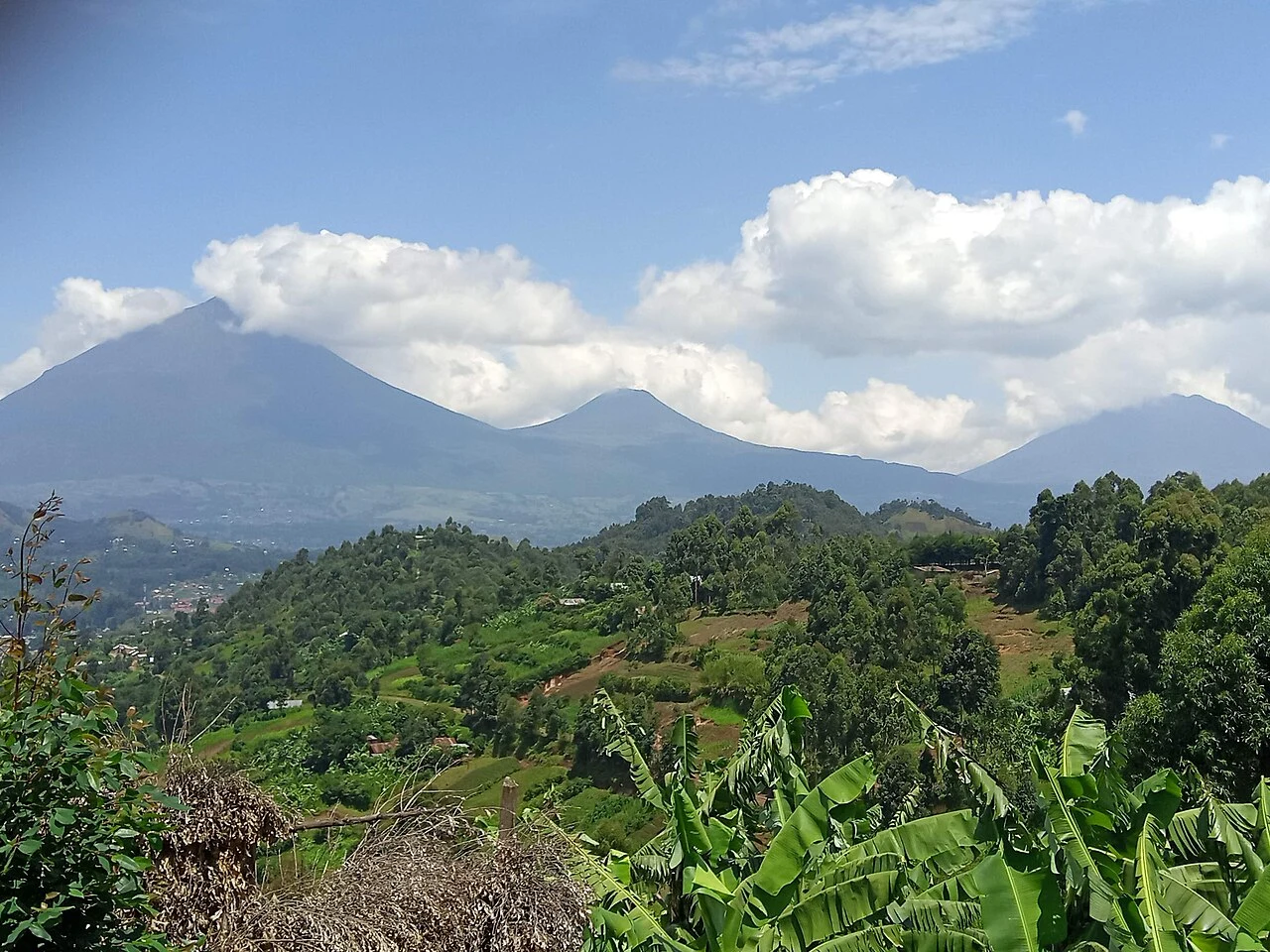

“Virunga” can refer to a broad mountain landscape or appear in the name of a particular protected area. That difference matters. A regional overview brings neighbouring settings into view, while a practical visit depends on the exact country, park, responsible authority and current arrangements.
This guide includes the Democratic Republic of the Congo because the mountain-gorilla conservation story crosses national boundaries. Inclusion is a geographic and editorial choice. It does not establish present visitor access, permit availability, safety or an available connection between countries. Those matters require current information from the responsible authorities.

Lake Victoria Island Cycling Tour from Kampala

Kampala Walking City Tours (Women-Guided)
Women-Guided Kampala walk Tour Discover Kampala, Uganda’s cultural capital, with inspiring female guides sharing t...

Steve Kampala Walking tours (Airpals Safaris tour)
Join our walking tours every day at 10:00Am or 2:00pm and get a broader perspective about the Geo-political landscap...

Best Jinja source of the River Nile day experience
This 1 day best of jinja tour is a great way to explore a mix of cultures, nature, history and new experiences with...
Separate the massif from the park
Virunga National Park’s own mountain-gorilla account describes the species in the Virunga Massif and Bwindi forest, across DRC, Uganda and Rwanda. It also explains the park’s conservation work, including monitoring, habitat protection and veterinary support. These are the park’s responsibilities and published claims, not operations run by this website.
A photograph of mountains from Uganda or Rwanda should retain that viewpoint in its caption. A distant skyline can connect an explanation of the landscape, but it cannot stand in for a documentary record of a different park. Notice where an image was made as well as what its subject is called.
Keep the animals accurately identified
Mountain gorillas and other gorilla populations should not be treated as interchangeable illustrations. Read the identification and location supplied by the photographer or responsible conservation organization. An image selected only because it looks dramatic may obscure the very geographic distinctions a reader is trying to understand.
On this site, documentary captions state the place and date supported by the source. They are not predictions about what a future visitor will see. The complete forest setting remains part of the image, rather than being removed to make an animal appear closer or more isolated.
Read conservation accounts in their own terms
A conservation organization may describe monitoring, research, habitat work or community programmes. These activities have different purposes and participants. A public account of scientific work does not imply that the same activity is offered to visitors, and a photograph of a professional at work does not make that person a guide available through this publication.
Look for a clear organization name, publication date and explanation of the work. Follow the original source if you want fuller detail. Be cautious about turning a short story into a general statement about a whole country or every community near a protected area.
Use an explicit information boundary
| This guide provides | Confirm separately |
|---|---|
| Geographic orientation | Current entry and protected-area access |
| Published conservation context | Any visitor activity and its responsible provider |
| Dated documentary photographs | Present conditions and available arrangements |
If you are considering travel, begin a fresh check of official information for the exact place and date. Ask the responsible organization to clarify anything that remains ambiguous. Do not infer that a route is available simply because an older article, photograph or comparison card names it.

3-Day Safari Murchison Falls Safari
Travelling to Murchison falls National Park makes one modest. You see what a tiny place you occupy in the world, we usher you into different activitie...

8-Day Uganda Vacation Including Chimps and Gorilla Trekking
This tour combines safari, primates encounter, and relaxation in just one go. One is able to cover a number of exper...

Inside Kampala Walking Tour (Female Guided)
EMPOWER YOUR KAMPALA EXPERIENCE WITH A FEMALE-GUIDED WALKING TOUR. Explore Kampala's vibrant culture and history wi...

Affordable 2 days Murchison Falls and Wildlife Game Viewing
2 days Murchison falls Safari Uganda, Murchison Falls National Park has spectacular beautiful falls and are definite...
The site’s live provider feed is separately configured for Uganda. It may show wider Ugandan safari products, and it is not evidence of DRC or Rwandan access. Keep that feed distinct from this article’s regional explanation. Return to the regional guides to compare the questions appropriate to each setting.

Zanzibar Jozani Forest and Spice Farm Tour with Swahili Lunch
Explore the natural and cultural richness of Zanzibar on a private guided tour of Jozani Forest and a traditional spice farm. Start your day after rea...

Kampala’s Best Experience walking tour
Based on our past positive reputation for the past years, we guarantee you that our team is so exceptional in delive...

Kampala Cultural Tour
Its an informative, breathe taking experience that makes theb visitor get a clear insight into the country's culture...

The Best 1Day Jinja Tour & source of the Nile River Experience
Jinja is arguably Uganda’s heartbeat, it is a gem of unrivaled beauty, an asset to Uganda of humongous economic po...